


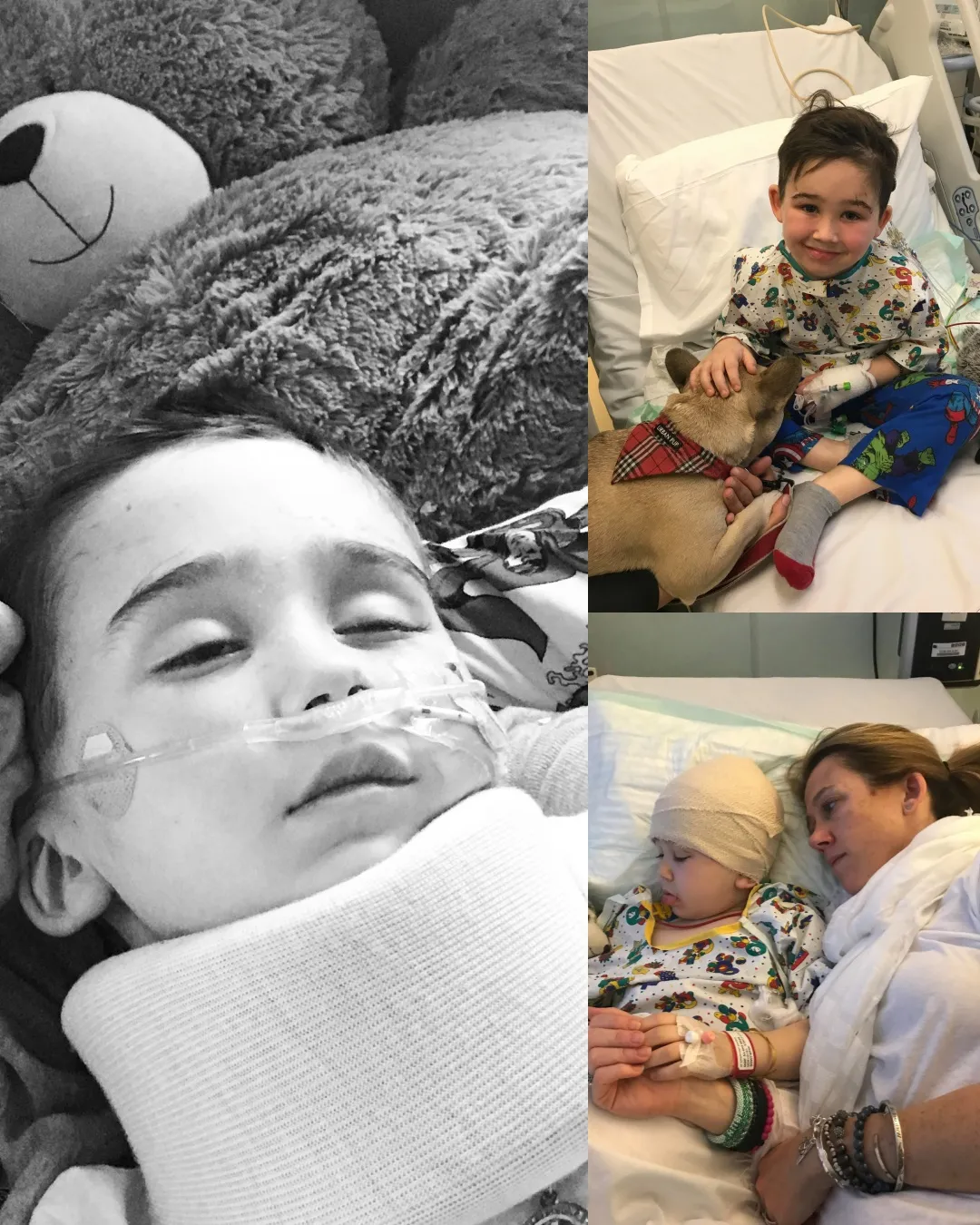
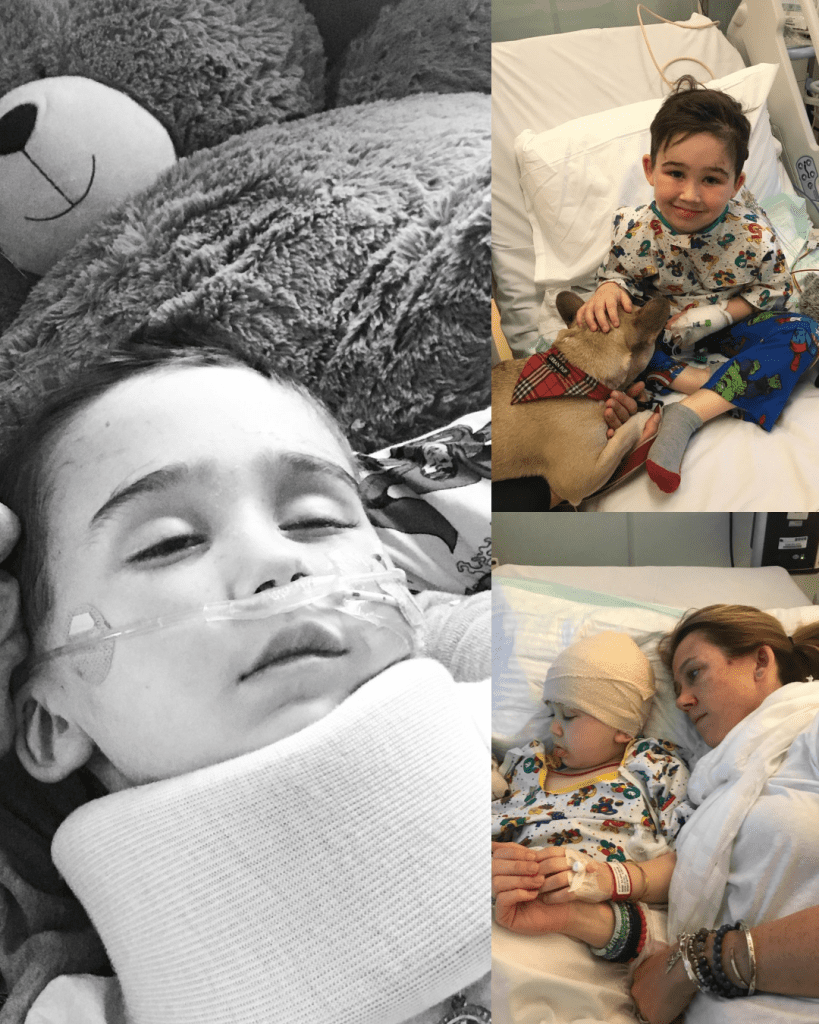
Devin’s Fight: A Mother’s Story of Love and Loss
On DIPG Awareness Day, Christine holds a photograph of her son, Devin, and remembers how quickly life can change.
Just a week before his diagnosis, they had been snowboarding together. Devin was only six years old, his cheeks red from the cold, his laughter filling the air as he sped down the hill.
He was fearless, weaving in and out of the powder like he had done it a thousand times, even though it was only his second winter on a snowboard. Christine remembers thinking: This is what childhood should be — joy, freedom, and the thrill of adventure.
But then came the headache.
At first, she thought it was exhaustion from the cold, maybe dehydration. Devin rubbed his temples and squinted against the light, brushing it off the way kids often do. But the headaches returned the next day, sharper, more insistent. His balance faltered. His smile seemed weaker, tilted slightly as though the muscles in his face had forgotten how to hold it.
Within days, Christine knew something was wrong.
Doctors ran tests, scans, endless evaluations. Christine sat in a sterile room, her hands twisting in her lap, waiting for answers she was not prepared to hear.
And then they told her: “Your son has diffuse intrinsic pontine glioma — DIPG. He has eight months to two years to live, if you’re lucky.”
The words were delivered gently, but no gentleness could blunt their impact. Christine’s world tilted on its axis. The room seemed smaller, the air too thin to breathe. Eight months? Two years? She wanted to scream, to bargain, to run.
But she sat still, holding Devin’s small hand in hers, forcing herself to listen as doctors explained the cruel truth: DIPG is inoperable. It grows in the brainstem, the very center that controls breathing, swallowing, and heartbeat. No surgery. Limited treatment. No cure.
How could this be happening to her little boy?
Devin didn’t understand the weight of the diagnosis. At six years old, he still wanted to play, to run outside, to cuddle with his dog and watch cartoons. Christine vowed in that moment that she would let him live as fully as possible, no matter how short the time.
The weeks that followed were a blur of hospital visits and treatment plans.
Radiation offered temporary relief, shrinking the tumor enough to give Devin more energy, more mobility. But Christine learned quickly that with DIPG, time borrowed is never enough.
Still, they refused to let the disease steal joy.
Christine bought him a new set of LEGOs — the biggest box she could find — and they built together late into the night, their hands fitting bricks into castles and spaceships. Devin’s imagination soared higher than the tumor could ever reach.
When he had the strength, they returned to the snow. Christine will never forget the sight of him, wobbling a little more now but still determined, still brave, still laughing as he slid down the hill.
He wanted to race her, and though she let him win, she knew in her heart that he had already lost a race much bigger than either of them could control.
Every small moment became precious. Pancakes for breakfast on a Tuesday. Movie nights with popcorn spilling across the couch.
Bedtime stories whispered in the dark, with Devin asking questions that pierced Christine’s heart: “Will I get better, Mom? Will I still be here next Christmas?”
She answered with hope, even when her voice trembled.
Friends and family gathered around them, offering meals, prayers, donations to help with the crushing medical bills.
Christine learned that people’s kindness could carry you when your own strength ran out.
Strangers sent cards. Neighbors left toys on the porch. Teachers came to visit, sitting cross-legged on the floor to play board games with Devin.
But the tumor was relentless.
Within months, Christine noticed more changes. Devin’s smile weakened further. His speech became slurred.
He struggled to swallow, turning mealtimes into battles that left them both exhausted. Eventually, a feeding tube replaced family dinners, and Christine cried quietly in the kitchen after putting him to bed, mourning something as simple as sharing a meal.
Yet Devin still shone.
He sang songs softly under his breath, his little voice cracking but still full of life.
He giggled at silly cartoons. He held his mother’s hand and whispered “I love you” so often that Christine wished she could bottle the words, to open them again and again after he was gone.
On good days, they went outside, sitting in the grass while Devin watched clouds float by.
“That one looks like a dragon,” he’d say, pointing with shaky fingers. “That one’s a rocket ship.” Christine nodded, committing every cloud-shape to memory, knowing one day she would look at the sky and see them alone.
On hard days, she climbed into bed with him, lying still as machines beeped steadily around them. She pressed her forehead to his and whispered prayers she wasn’t sure she believed anymore: prayers for healing, for more time, for peace.
DIPG is merciless. It strips away abilities one by one until only the essence of the child remains. But Devin’s essence was love — pure, unfiltered, and unbreakable.
As months passed, Christine learned to live in fragments of time. She didn’t think about years or even months anymore.
She thought about mornings when Devin woke with enough energy to smile. Afternoons when he managed to laugh at his brother’s joke. Evenings when he whispered, “Sing me one more song, Mom.”
And always, in the back of her mind, the countdown ticked louder.
On DIPG Awareness Day, Christine shares his story not to dwell on the heartbreak, but to demand a future where no parent has to hear what she heard.
She speaks Devin’s name so the world will know that he was here, that he mattered, that he loved and was loved beyond measure.
She advocates for research, for funding, for hope. She tells people that while DIPG may be rare, its impact is catastrophic, and children like Devin deserve more than the cruelty of “eight months to two years.”
Christine remembers him as the boy who snowboarded fearlessly, who built castles from LEGOs, who looked at clouds and saw dragons. She remembers his laughter, his songs, his courage.
And when people ask her what they can do, she answers simply: Remember him. Support the fight. Believe that someday, another mother will hear a different diagnosis — one with hope, one with options, one with life beyond the countdown.
Because Devin’s story is not just about loss.
It is about love that outlives everything.