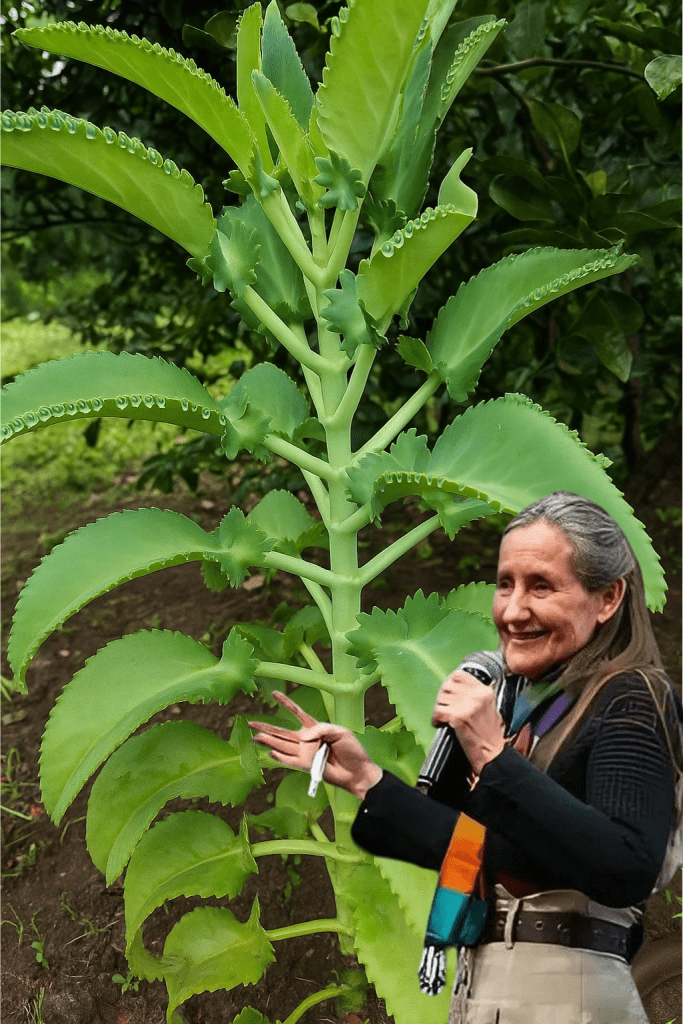


It’s small. It’s green. It sits quietly by your kitchen window or on your balcony, soaking in the sun. But what if we told you that this unassuming little succulent—often called the miracle leaf, mother of thousands, or simply Kalanchoe—is one of the most powerful natural healing allies you’ll ever meet?
From traditional medicine cabinets across Africa, Asia, and Latin America to modern interest in plant-based wellness, Kalanchoe (especially Kalanchoe pinnata and Kalanchoe daigremontiana) continues to earn its reputation as a versatile, easy-to-use home remedy.
And yes, it does more than just sit there looking pretty.
Let’s explore 8 surprising ways this humble plant can support your health, how to use it safely, and the science behind its healing power.
🌿 What Is Kalanchoe, Really?
Kalanchoe isn’t just one plant—it’s a genus of more than 100 succulent species. The two most well-known for medicinal use are:
– Kalanchoe pinnata (also known as Bryophyllum pinnatum)
– Kalanchoe daigremontiana
These species are known for their thick, fleshy leaves, ability to grow “baby plants” along their edges, and their use in teas, poultices, and skin salves across multiple traditional healing systems.
🩹 1. Soothes Inflammation and Skin Irritation
Got a bug bite, swollen joint, or skin rash?
Crushed kalanchoe leaves are known for their anti-inflammatory and cooling properties. The fresh gel or pulp can be applied directly to the skin for fast, natural relief.
✅ How to use:
– Rinse and crush a fresh leaf
– Apply the pulp directly to the affected area
– Leave on for 20–30 minutes, then rinse gently
Perfect for calming minor burns, redness, or irritated skin.
🛡️ 2. Natural Immune Support from Within
Kalanchoe is rich in flavonoids, antioxidants, and plant sterols that may help your body combat oxidative stress and stay more resilient during seasonal changes.
✅ How to use:
– Boil 2–3 leaves in water to make a tea
– Sip ½ cup once or twice a day during cold or flu season
🌬️ 3. Eases Coughs and Supports Breathing
Traditionally used in Ayurvedic and African remedies for chest congestion and coughs, kalanchoe may reduce inflammation in the airways and help loosen phlegm.
✅ How to use:
– Add kalanchoe to warm teas or herbal infusions
– Drink small amounts slowly when your chest feels tight
🧴 4. Speeds Up Skin Healing and Reduces Scarring
Whether it’s a small cut, blister, or scrape, Kalanchoe’s natural wound-healing compounds help cleanse the area and accelerate skin repair.
✅ How to use:
– Blend the leaf into a paste
– Apply as a gentle, natural ointment to clean skin
– Repeat once or twice daily
🩺 5. May Help Balance Blood Pressure (Used Traditionally)
Some traditional systems suggest that Kalanchoe may support circulation and help regulate pressure due to its calming and mild detoxifying effects.
⚠️ Use caution—this is not a replacement for medication. Always speak to your healthcare provider first.
🌱 6. A Gentle Ally for Detox and Liver Support
In herbal detox routines, kalanchoe is often included as a gentle support for the liver and kidneys. Its natural diuretic properties may help your body flush toxins and reduce swelling.
✅ A few tablespoons of juice per day are commonly used in traditional practices—but again, moderation is key.
🧬 7. Promising Research in Cancer Studies
While still in the early stages, studies have shown that kalanchoe contains bufadienolides, compounds that may have cytotoxic effects on certain cancer cells in lab environments.
⚠️ This is NOT a substitute for treatment—but it highlights why kalanchoe is gaining attention in natural health research.
🧘 8. Encourages Full-Body Wellness and Balance
With its anti-inflammatory, immune-supporting, and antioxidant properties, kalanchoe is often used as a gentle daily tonic to support overall wellness—especially for those seeking plant-based, low-impact remedies.
🍵 How to Use Kalanchoe Safely at Home
✅ Topical Use (External)
– Crush a clean, fresh leaf
– Apply to minor wounds, bruises, swelling, or irritated skin
– Option: mix pulp with a little coconut oil for added moisture
✅ Internal Use (for certain species ONLY)
Use only Kalanchoe pinnata or daigremontiana, in small amounts
🫖 Kalanchoe Tea:
– Boil 2–3 leaves in 2 cups water for 5–7 minutes
– Let cool, sip ½ cup once or twice a day
🥄 Kalanchoe Juice:
– Blend 1 tender leaf with a little water
– Strain
– Take 1–2 tablespoons daily
⚠️ Important Precautions: Don’t Skip These
– ❗ Always identify your plant correctly—some kalanchoe species contain toxins
– ❗ Avoid during pregnancy and breastfeeding
– ❗ Keep away from pets—toxic to cats and dogs
– ❗ Do not mix with sedatives or blood pressure meds without doctor approval
– ❗ Never use for long-term internal use unless guided by a healthcare professional
🌍 Cultural Wisdom Around the World
– India (Ayurveda): Used for coughs, kidney stones, and wound healing
– Brazil: Known as “folha da fortuna,” valued for anti-inflammatory use
– Vietnam: Called “lá bỏng,” applied to burns and skin injuries
– 🌍 Africa: Used for fever, respiratory infections, and immune support
🔬 What Science Is Beginning to Confirm
Early research suggests kalanchoe may:
– Reduce swelling and inflammation
– Fight certain bacteria
– Help wounds heal faster
– Show selective cytotoxic activity in lab-grown cancer cells
💬 What People Are Saying
🗣️ “I used it on a mild kitchen burn—healed in half the time.”
🗣️ “We’ve used kalanchoe tea for generations to soothe sore throats.”
🗣️ “The plant is bitter, but it works!”
🌟 Final Thought: A Plant That Heals with Humility
Kalanchoe doesn’t boast. It doesn’t take up space. But leaf by leaf, it quietly offers healing where it’s needed—whether on your skin, in your chest, or through a warm tea in your hands.
Use it wisely. Use it respectfully. And remember: sometimes, the most powerful remedies are the ones quietly growing right under your nose. 🌿
🪴 Got kalanchoe at home? You’re not just growing a succulent. You’re keeping a centuries-old tradition of plant-based healing alive—one leaf at a time.